1. Let the location narrow the menu
Start with the time between leaving refrigeration and eating, the expected weather and the distance you must carry everything. A nearby table with easy transport allows a different menu from a long walk without facilities. If you cannot maintain the conditions a food requires, choose a different food.
Prefer a small number of dishes with a clear serving method. Foods that need several bowls, last-minute assembly or complicated temperature control create more work than their menu description suggests. Count serving equipment before committing to them.
Check dietary requirements with the people attending. Keep packaging or a clear ingredient record when it helps someone make their own decision. Do not promise an allergen-free meal unless you can genuinely manage ingredients, preparation, transport and cross-contact.
2. Make a container-to-menu row
Use one row per dish. Record the dish, quantity, container, temperature requirement, serving utensil and person responsible. Give boxes simple identifiers, such as “Box A,” if several look alike. Put labels on the outside where they remain readable without opening the food.
| Food | Container | Serving / return |
|---|---|---|
| Whole apples | Clean produce bag | Hand out / carry cores back |
| Bread rolls | Dry lidded box | Clean tongs / crumb check |
| Chilled salad | Sealed food-safe box in a monitored cooler | Dedicated spoon / assess safe storage time |
These rows demonstrate organisation, not a complete menu or a guarantee of safe storage. The actual ingredients and conditions decide the precautions required.
3. Test reusable containers before packing
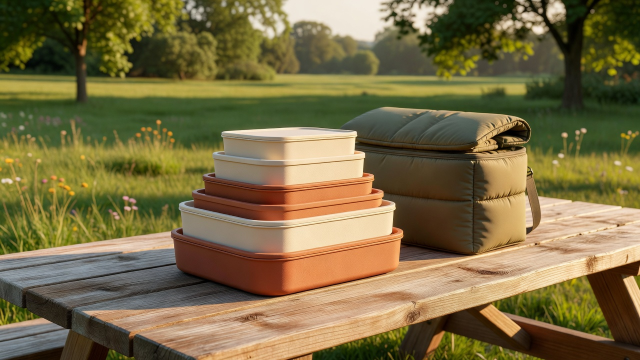
Use containers intended for food contact and follow the manufacturer’s instructions. Check seals, hinges and lids for damage. A box that stores dry crackers well may not be suitable for dressing or another liquid. Test leak resistance with water at home, then clean and dry it before food use.
Match the size to the portion. Excessively large boxes waste bag space; overfilled boxes can spill or prevent a secure seal. Carry sauces separately when that improves both sealing and texture. Do not assume a reusable container is microwave-safe, freezer-safe or suitable for hot food without checking.
Pack heavy, stable items low in the bag. Keep anything that must remain upright in a position that stays upright during the actual journey, including on public transport.
4. Treat cooling as a separate task
Chill suitable foods before packing, use enough cold sources and follow current food-safety guidance for your location. A cooler needs a plan for both travel and the time spent at the picnic. Keep it shaded where possible, minimise unnecessary opening and use a suitable thermometer to check conditions.
USDA guidance commonly uses 40°F / 4°C or below for cold perishable food. Its general limit outside safe temperature control is two hours, reduced to one hour when the temperature is above 90°F / 32°C. These limits are cumulative, not a fresh allowance each time food changes location. Follow stricter product instructions and local advice where applicable.
Do not judge safety by smell or appearance. If you cannot establish that perishable food has been handled safely, do not keep it for later.
5. Pack for serving and clean-up
Write a serving method beside every dish: hand out, pour, scoop or assemble. That small verb reveals missing equipment. Include clean utensils, a stable place to put lids and an appropriate hand-cleaning arrangement. Hand sanitiser is not a universal substitute for washing visibly dirty hands with soap and safe water.
Keep raw foods separate from ready-to-eat foods and avoid bringing raw animal products unless you have a suitable preparation, cooking and hygiene plan. A simple ready-to-eat menu often removes several difficult tasks from a short outing.
Provide distinct bags or boxes for dirty utensils, food waste and other rubbish. Do not place used cutlery back among clean spares. Pack enough containment to bring waste home even if the site’s bins are missing or full.
6. Plan what happens after eating
Decide in advance who takes each container home and who cleans it. Returning a borrowed box still full of unidentified leftovers creates an avoidable problem. Label ownership discreetly and keep a separate count of lids, which are easy to leave behind under a blanket or table.
Leftovers need the same safety assessment as the original meal. Packing them back into a cooler does not reverse time spent outside safe conditions. Only retain food you can establish has remained safe, and handle it promptly after returning.
For current guidance, consult USDA FSIS, the US Food and Drug Administration, the UK Food Standards Agency or your local public-health authority. These planning notes do not replace professional advice or official safety instructions.